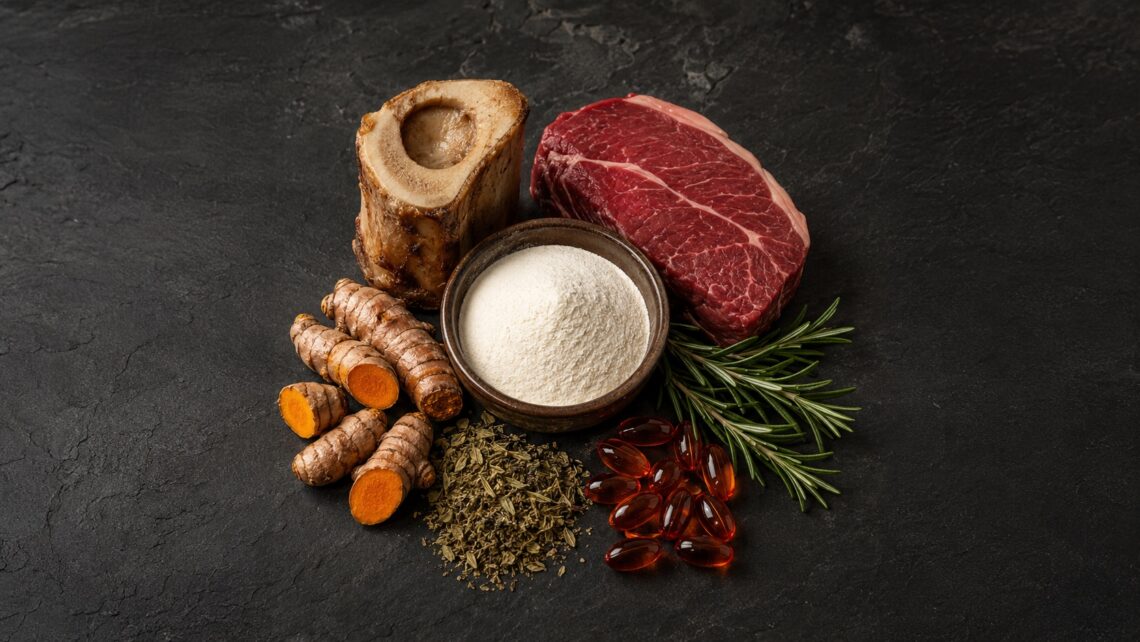
Long before supplement aisles and synthetic multivitamins, people got their nutrition the way nature provided it. Bone broth simmered for days. Organ meats eaten nose to tail. Collagen-rich cuts that modern diets have largely abandoned. NativePath builds its entire product philosophy around returning to that ancestral approach, packaging traditionally-sourced nutrients in a form that fits a modern routine.
Whether that philosophy holds up to scrutiny depends on the specific product. This page looks at what NativePath sells, how each product connects to the ancestral and natural wellness tradition it draws from, and what is genuinely worth knowing before you buy.
The Ancestral Nutrition Idea Behind NativePath
The core premise of ancestral nutrition is simple: the human body evolved eating certain foods, and many modern health problems trace back to how far we have drifted from that original diet. Collagen is the clearest example. Our ancestors consumed the whole animal, including the skin, connective tissue, and bones that are rich in collagen. Modern diets favor muscle meat and discard the rest, which means most people now get a fraction of the collagen their grandparents did.
NativePath positions its products as a bridge back to that older way of eating. Grass-fed collagen instead of factory-farmed. Whole-food-derived nutrients instead of synthetic isolates. It is a marketing story, but it is one grounded in a real observation about how modern diets differ from traditional ones.
The question for any individual product is whether the sourcing and formulation actually deliver on that premise, or whether the ancestral framing is doing more work than the ingredients. The rest of this page takes each product on its own terms.
NativePath Grass-Fed Collagen Peptides
Collagen is where the ancestral story is strongest, and it is NativePath’s flagship product.
The collagen comes from grass-fed, pasture-raised bovine sources. This matters to the ancestral premise because grass-fed animals have a different nutritional profile than grain-finished, factory-farmed cattle, and because pasture-raised sourcing aligns with the traditional-farming ethos the brand is built on.
The peptides are hydrolyzed, meaning the collagen protein is enzymatically broken into smaller chains for absorption. Each serving provides around 10 grams of collagen protein with the amino acid profile collagen is prized for: glycine, proline, and hydroxyproline. It dissolves cleanly in hot or cold liquid and is effectively flavorless, which makes it easy to add to coffee, tea, or a morning smoothie the way you might once have stirred in bone broth.
Collagen supplementation has reasonable evidence behind it for skin elasticity, joint comfort, and connective tissue support when taken consistently at 5 to 15 grams daily over two to three months. The effects are gradual rather than dramatic.
For the full breakdown including current sale pricing and user reports, see our NativePath Collagen Peptides review.
NativePath Native Creatine
Creatine is not an ancestral supplement in the way collagen is, and it is worth being honest about that. It is a performance compound with a deep research base, not a traditional food-derived nutrient. NativePath sells it because it works, not because it fits the nose-to-tail story.
Native Creatine uses creatine monohydrate, the most studied and best-supported form. The evidence for creatine’s benefits to strength, power, muscle recovery, and increasingly cognitive function is among the strongest of any supplement on the market. The formula itself is not proprietary or unusual. What NativePath offers is creatine monohydrate in its familiar direct-to-consumer packaging and pricing.
This product is particularly relevant for adults over 50, where creatine’s role in preserving muscle mass and supporting cognitive health becomes more valuable. For a detailed, evidence-based look at creatine for older adults, see our NativePath Native Creatine review.
Native Hydrate
Modern electrolyte powders are, in a sense, a return to something old. Traditional cultures replenished minerals through unrefined salt, mineral-rich water, and whole foods. The modern hydration category repackages that idea as sodium, potassium, and magnesium in a flavored powder.
Native Hydrate is NativePath’s entry, available in tubs and travel-friendly stick packs across several flavors. It competes in a crowded field alongside LMNT, Liquid IV, and others, with a similar mineral profile and value proposition. The stick packs suit travel and portion control, and a variety pack lets you sample flavors before committing.
For a full assessment of whether the formula actually performs, see our Native Hydrate review.
NativePath CoQ10 Complex
CoQ10 sits at the intersection of natural and clinical. It is a compound your body produces on its own and uses in cellular energy production, but supplementation is generally a modern intervention rather than a traditional one.
Natural CoQ10 production declines with age, and the supplement is commonly used by people over 40, those taking statins (which deplete CoQ10), and anyone interested in cardiovascular and mitochondrial support. NativePath sells it as a complex, meaning additional supporting ingredients are typically included. The form matters here: ubiquinol is generally considered more bioavailable than ubiquinone, so check the label for which one you are getting and at what dose.
NativePath Antarctic Krill Oil
Krill oil is one of the more defensible natural-sourcing stories in the NativePath line. Sourced from Antarctic krill rather than farmed fish, the omega-3 fatty acids are bound to phospholipids rather than triglycerides, which some research suggests improves absorption compared to standard fish oil.
Omega-3s are one of the nutrients most consistently under-consumed in modern diets, making this a reasonable supplement for people who do not regularly eat fatty fish. If you already take a fish oil you are satisfied with, krill oil is a research-worthy upgrade rather than an urgent switch.
NativePath Berberine
Berberine is a plant compound with deep roots in traditional medicine, used for centuries in both Chinese and Ayurvedic practice long before modern research took interest. That traditional pedigree fits the aztec.style natural-remedies lens well.
Modern studies have examined berberine’s effects on blood sugar regulation, with some comparing its glucose-lowering effect favorably to metformin. It is not a pharmaceutical and should not replace prescribed medication without a doctor’s involvement, particularly because it interacts with certain drugs. Of all the NativePath products, this is one where reading the label and consulting a healthcare provider matters most.
NativePath D3+K2
Vitamin D3 and K2 are paired because they work together in calcium metabolism. D3 drives calcium absorption; K2 directs that calcium into bones rather than arteries and soft tissue. Traditional diets rich in pasture-raised animal fats and fermented foods supplied K2 naturally, a nutrient most modern diets lack.
NativePath’s version follows the standard D3+K2 formulation. The detail worth checking is the K2 form, with MK-7 generally preferred over MK-4 for its longer activity in the body.
The Broader NativePath Line
NativePath has expanded well beyond its flagship products. Several lean directly into the ancestral and traditional-wellness theme:
Organ Complex offers desiccated organ supplements, the most literal expression of nose-to-tail ancestral eating. Colostrum taps a traditional first-milk nutrient that has gained momentum in gut health circles. Synbiotic pairs prebiotics and probiotics for the gut microbiome. Native Liver is a liver support formula. NAC serves as an antioxidant and glutathione precursor. MCT Oil supplies medium-chain triglycerides for energy and ketogenic support.
Others are more conventional wellness supplements: Native Balance for hormonal and metabolic support, Native Mind for cognitive health, Bladder Health targeting urinary frequency, B-Complex for the B vitamin spectrum, Greens as a greens powder, Fiber for digestive regularity, Liposomal Vitamin C for enhanced absorption, Bone Health Collagen, Joint Health, Eye Health, and Skin Renewal.
Every product ships through the NativePath website under the same subscription and bundle pricing used across the brand.
Is NativePath a Reputable Company?
This is the question people search most, and the honest answer is that NativePath is a legitimate company selling real products. You will receive what you order, and the products contain what the label describes.
The skepticism usually comes from the advertising. NativePath uses aggressive direct-response marketing with health claims, doctor endorsements, and urgency-driven pricing. That style triggers suspicion because it is the same playbook used by both reputable brands and low-quality operators. The tone of the ads tells you little about the quality of the product inside.
The more useful questions are about sourcing and testing. NativePath states its products are made in GMP-certified facilities in the United States. It offers a return policy, though reports on the ease of the process vary. Claims about grass-fed sourcing and third-party testing are reasonable to verify directly by requesting a lot-specific certificate of analysis rather than relying on a marketing page.
Does NativePath Collagen Really Work?
Collagen peptide supplementation has a solid evidence base for skin elasticity, joint comfort, and connective tissue support at doses of 5 to 15 grams daily over 8 to 12 weeks. Results are gradual. Most people who report benefits describe steady improvements in skin hydration, nail strength, and joint stiffness over a couple of months rather than an overnight change.
NativePath collagen is a well-made hydrolyzed grass-fed bovine collagen. In composition it is not dramatically different from other quality grass-fed collagen powders. The real question is whether collagen supplementation in general matches your goals, not whether this particular brand is uniquely effective.
Where Is NativePath Collagen Made and Sourced?
NativePath states its products are manufactured in GMP-certified facilities in the United States, using grass-fed, pasture-raised bovine collagen. The company does not always specify the country where the raw collagen originates; grass-fed bovine collagen is commonly sourced from Brazil, Argentina, Australia, or the United States. For buyers to whom sourcing transparency matters, this is worth confirming directly.
Frequently Asked Questions
What makes NativePath different from other supplement brands? NativePath positions itself around ancestral nutrition, emphasizing grass-fed and traditionally-sourced ingredients over synthetic isolates. In practice, some products deliver strongly on that premise (collagen, krill oil, organ complex) while others are conventional supplements with ancestral branding.
Is NativePath collagen grass-fed? Yes. NativePath collagen is sourced from grass-fed, pasture-raised bovine, which is central to the brand’s natural-sourcing positioning.
Is NativePath legit? Yes. It is a registered company that manufactures and ships supplements as described. The skepticism it attracts comes from its advertising style rather than product quality.
Is NativePath collagen hydrolyzed? Yes. The collagen peptides are hydrolyzed into smaller chains for easier absorption and clean solubility in hot or cold liquids.
Is berberine a natural remedy? Berberine is a plant-derived compound used for centuries in traditional Chinese and Ayurvedic medicine. Modern research has focused on its effects on blood sugar, but it has drug interactions and should be discussed with a healthcare provider.
Where is NativePath collagen made? NativePath states its products are manufactured in GMP-certified US facilities. The raw grass-fed collagen may be sourced internationally, which is common for bovine collagen.
Does NativePath collagen have side effects? Collagen peptides are generally well tolerated. Mild digestive discomfort or bloating can occur when starting. People with bovine allergies should avoid it, and those on calcium-heavy regimens should be aware collagen is high in hydroxyproline, which metabolizes into oxalate.
Where can I buy NativePath products? NativePath sells exclusively through its own website, where bundle pricing and subscription discounts are available. The products are not reliably available through retail stores or major marketplaces.